How to color music notes in Flat
Last updated October 13, 2026
Note colors in Flat change the color of the noteheads in a score. Flat provides two ways to color the notes heads, automatically and manually: an automatic mode that colors every note by pitch, and a manual tool that colors a single note or a selection, including a transparent color that makes notes and rests invisible.
Which note coloring tools does Flat offer?
Flat separates the two jobs. Automatic coloring is a score-wide display mode set in the Layout tab; manual coloring is a tool in the Notation tab that applies to whatever you have selected. They can be combined, with a manual color overriding the automatic one on the notes you touch.
| Feature | Where to find it | Icon |
|---|---|---|
| Automatic notes color | Left panel, Layout tab, Note heads |  |
| Manual notes color | Left panel, Notation tab, Pitch and Representation |  |
The note coloring tools are available in our editor for Flat for Education users.
How do I color notes automatically?
Flat offers an automatic colorization feature when using Boomwhackers: we will automatically apply Boomwhackers colors to all the note heads in your sheet music. The mode lives in the Note heads section of the Layout tab and recolors existing notes as well as the ones you add afterwards.
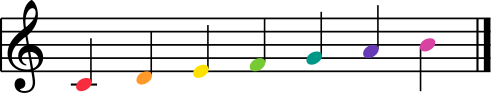
Read how to use Boomwhackers colors on your sheet music for the full walkthrough, or the automatic notehead modes for the colors and shapes Flat can apply at once.
How do I color specific notes by hand?
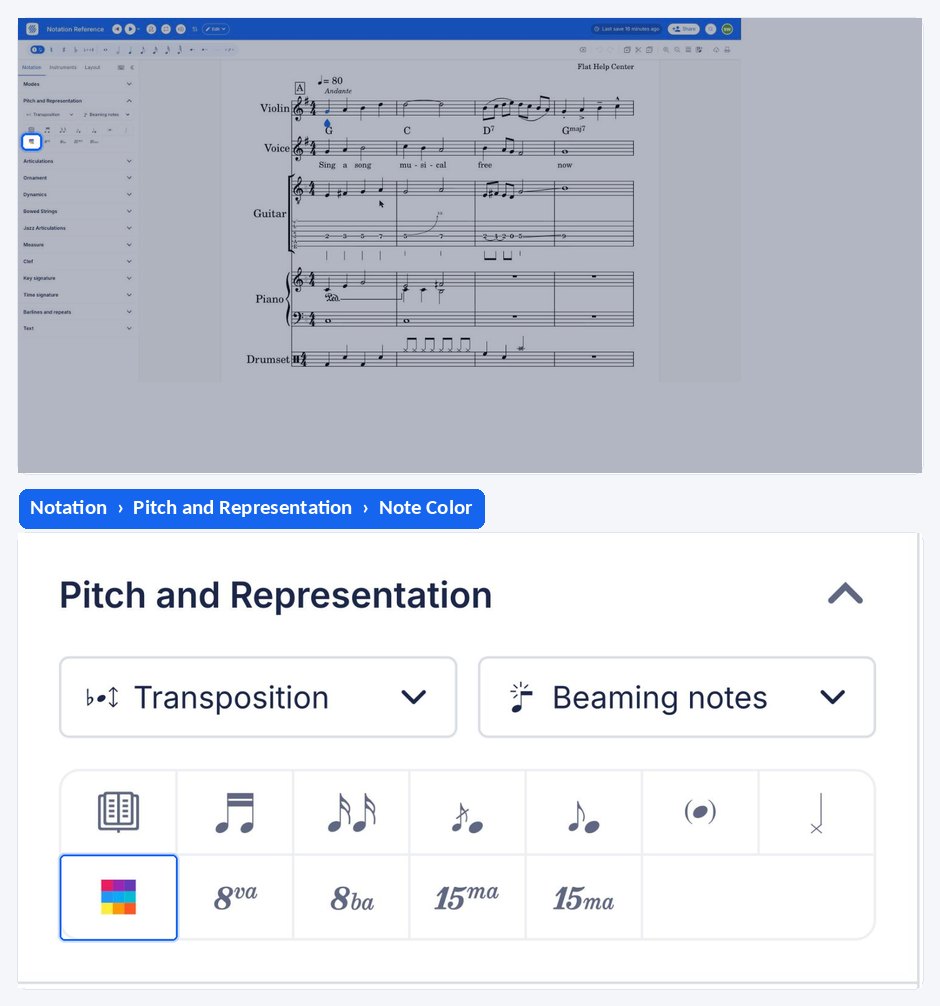
You can manually change the color of one or multiple notes using the tool available in the left panel, under Pitch and Representation in the Notation tab. This tool allows to choose among a preset of colors and also use the color picker to use any color you want.
Put your cursor on a note to change a single note color, or select multiple notes to apply a color on a range of notes.
Can I build my own color scheme?
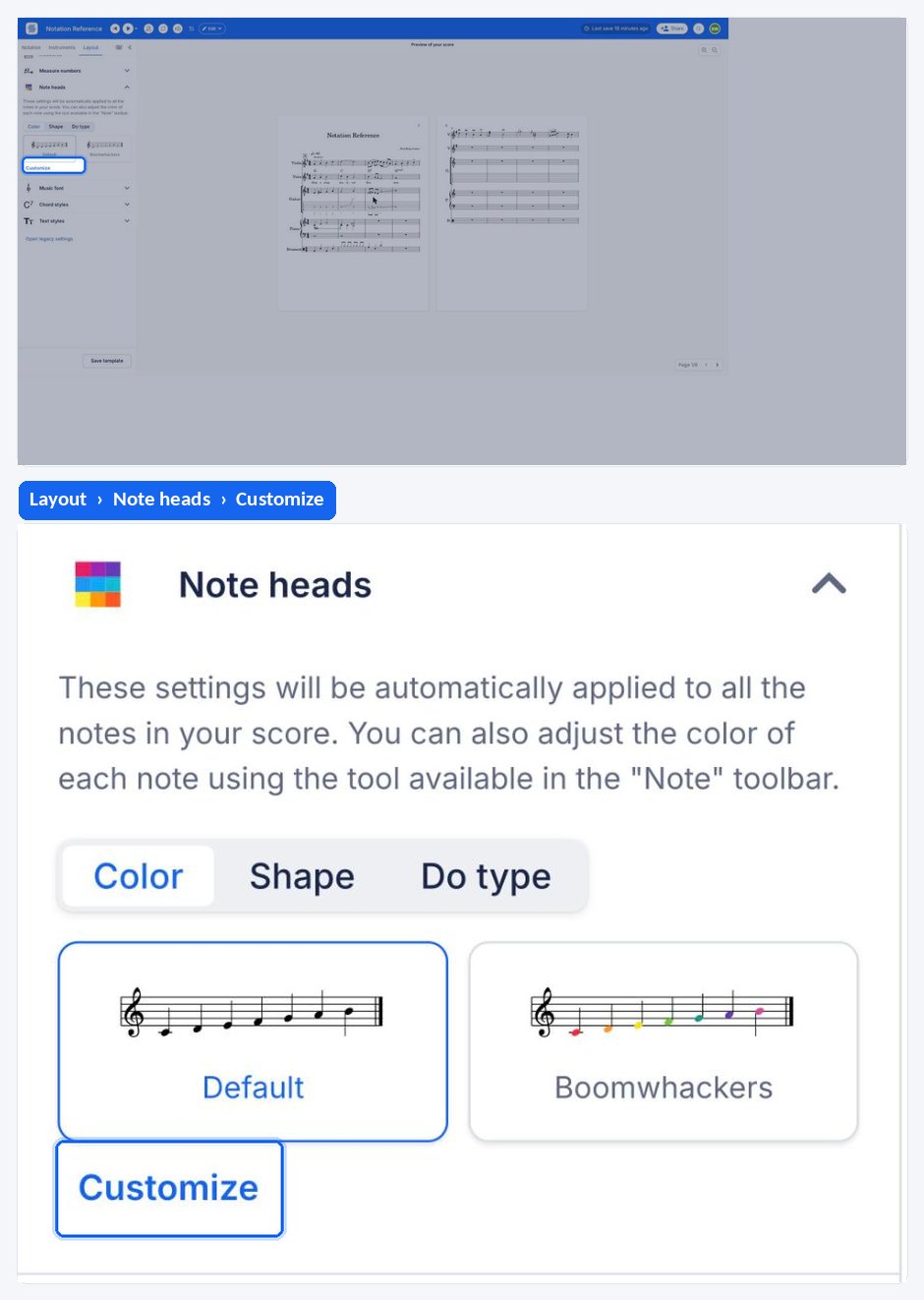
You can now craft your very own color scheme! To get started, simply go to the layout settings. There you'll find the option to handpick colors for each unique note pitch, giving you the creative freedom to create a musical experience that looks just the way you like it.
How do I hide notes with the transparent color?
You can use the transparent color from the color picker to create empty measures with hidden rests and notes. This is useful for example to make worksheets to print: the measures keep their content and their playback, but nothing is drawn on the page.
Frequently asked questions
What is the difference between automatic and manual note colors?
Automatic coloring is a display mode applied to the whole score from its pitches, so new notes are colored as you write them. Manual coloring is a one-off change on the note under your cursor or on a selection, chosen from a preset or the color picker.
Do colored notes stay colored when I print or export?
Yes. Note colors are part of the score's notation, so they appear in the printed page and in the PDF and image exports. That is what makes the transparent color useful for building worksheets with blanks to fill in.
What does the transparent color actually remove?
Only the drawing. A note or rest set to transparent keeps its place in the measure and still plays back - it simply is not shown. That is how an apparently empty measure can still hold correct rhythm underneath.
Can I combine colors with note names in the noteheads?
Yes. A color mode and a shape mode can be active at the same time, for instance Boomwhackers colors with note names printed inside the heads - see automatic notehead modes.