How to add, change, or remove tempo marks in Flat
Last updated September 23, 2026
A tempo mark in Flat sets the speed of the music in beats per minute from the point where it is placed. Flat applies a new tempo until the next tempo mark or the end of the score, lets you change its beat unit, and can play a preview of the value with its metronome before you commit.
Where do I find the tempo tool?
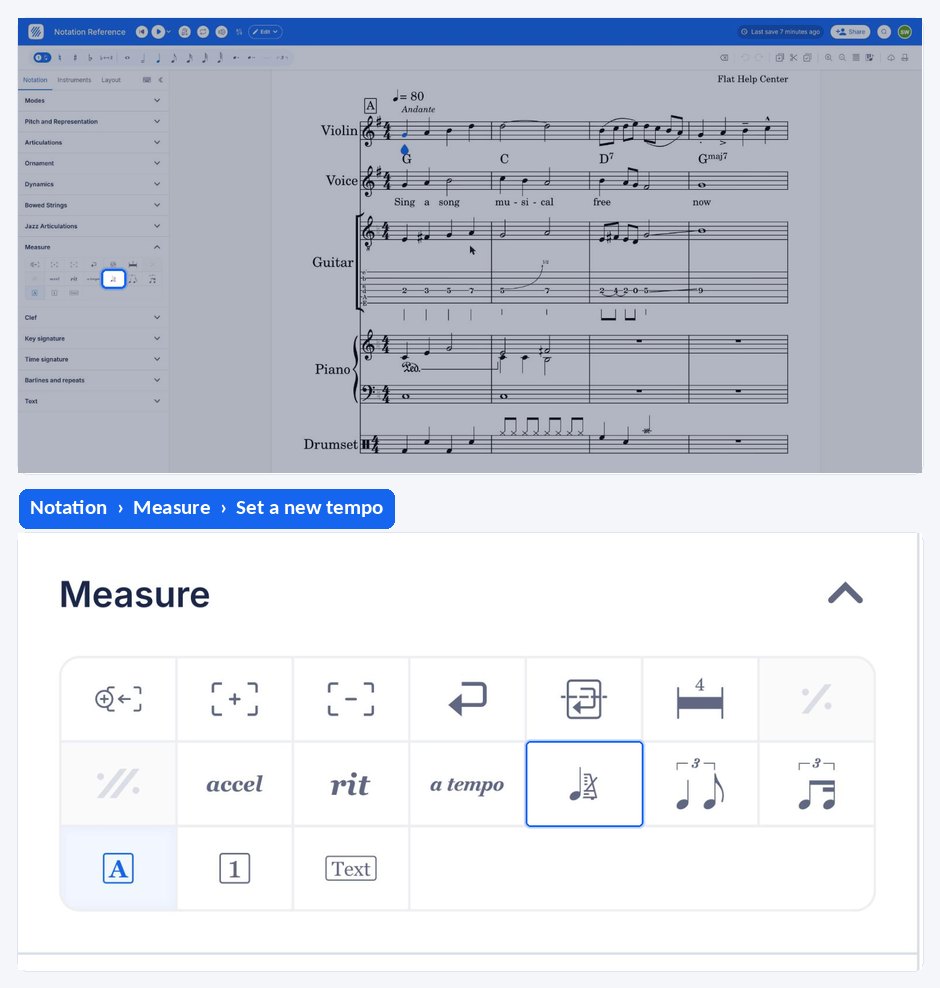
The tempo tool lives in the left panel: open the Notation tab and go to the Measure section. It writes a tempo mark on the measure your cursor is in, or across the measures you selected before opening it.
| Feature | Where to find it | Icon |
|---|---|---|
| Tempo marks | Notation tab, Measure section |  |
How do I add a new tempo mark (BPM)?
Open the Notation tab in the left panel, go to the Measure section, click the tempo tool and enter the desired tempo. If you haven't selected anything, the new tempo will be used until the next tempo mark or the end of the score. If you only want to change the tempo for several measures, select those measures before entering the new tempo.
How do I change an existing tempo mark?
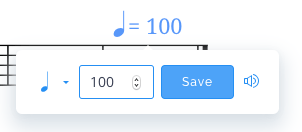
You can change an existing tempo mark by clicking on the mark in the score and inputting the new tempo, or by using the tempo tool in the Measure section of the Notation tab. The new value then applies from that mark onwards, exactly like a tempo you add.
How do I remove a tempo mark?
To remove a tempo mark, click on the mark, then click on the delete icon in the toolbar. Removing the mark takes its value out of the score; to put a different one in its place, add a new tempo mark from the Measure section of the Notation tab.
How do I change the beat unit?
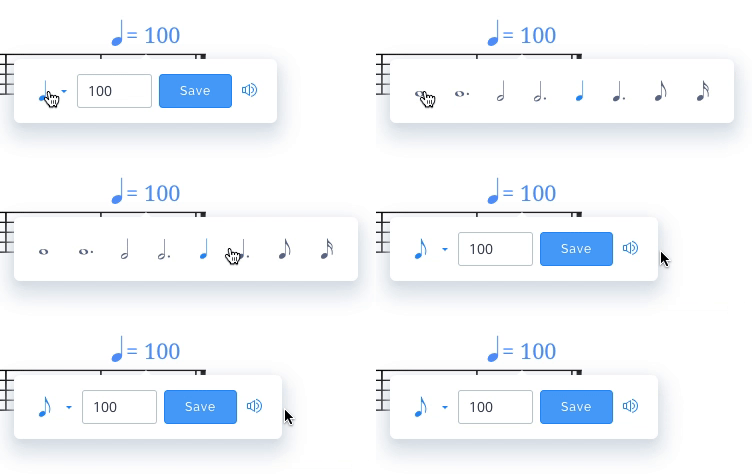
The beat unit is the note value the BPM figure counts — a quarter note, a dotted quarter, and so on. You can change it by clicking on the existing beat unit and choosing the new one, without having to re-enter the tempo value itself.
How do I hear the tempo or see its textual equivalent?
When you insert or change a tempo mark, click on the audio button in the popover. This will display the complete interface with the textual tempo marks and play a preview of the new tempo with our metronome, so you can judge the speed before applying it.
How do I add a textual tempo mark?
Looking to use words to indicate the tempo instead of numbers? Right now, you can do this by using the Expression text with the annotation tool, which places the wording on the staff as text rather than as a tempo value Flat plays back.
How do I add a new tempo mark (BPM)?
A tempo mark is entered as a number of beats per minute. With nothing selected, the new tempo is used until the next tempo mark or the end of the score; select a range of measures first and the change is limited to those measures.
Tap the measure where the tempo should change, drag the tool palette up, tap the tempo tool under Measure, and enter the value. With nothing selected the new tempo applies until the next tempo mark or the end of the score; to change it for a few measures only, select those measures first.
How do I change an existing tempo mark?
An existing tempo mark can be given a new value, which then applies from that mark onwards exactly like a tempo you add. The beat unit — the note value the BPM figure counts — is changed from the existing beat unit itself, without re-entering the tempo number.
Tap the tempo mark in the score and enter the new value, or select the measure and use the tempo tool under Measure again. The new value applies from that mark onwards, exactly like a tempo you add.
How do I remove a tempo mark?
Removing a tempo mark takes its value out of the score. A tempo mark is an element of the score like any other, so it can be taken out again at any point, and a new one added in its place when the passage needs a different speed.
Tap the tempo mark in the score, then tap the delete button in the top toolbar. That takes its value out of the score; to put a different one in its place, add a new tempo mark from the Measure section.
How do I hear the tempo or see its textual equivalent?
When you insert or change a tempo mark, the audio button in the popover displays the complete interface with the textual tempo marks and plays a preview of the new tempo with Flat's metronome, so you can judge the speed before applying it.
Tap the metronome in the top bar while the tempo mark is selected to hear the value before you commit to it.
How do I add a textual tempo mark?
Words such as Allegro or Andante are not entered as tempo values in Flat. Right now, you can do this by using the Expression text with the annotation tool, which places the wording on the staff as text rather than as a tempo Flat plays back.
Frequently asked questions
Can I write Allegro instead of a number?
Not as a tempo mark. Flat's tempo marks carry a BPM value and a beat unit, so a word like Allegro is added separately, as Expression text through the annotation tool. The audio interface also shows the textual equivalent of a numeric value, which helps you pick the right figure.
Why did my tempo change affect more of the score than I expected?
Because a tempo mark stays in force until the next one. With nothing selected, the value you enter applies from that point to the next tempo mark or the end of the score. Select the measures you want to cover before entering the tempo to limit it to that passage.
What is the difference between a tempo mark and the playback speed?
A tempo mark is part of the score: it is printed, it is read by performers, and it defines the speed from where it sits. The playback speed controls in the top bar only change how fast Flat plays the score back to you, which is useful for practice and leaves the notation untouched.