How to add a da capo in Flat
Last updated September 16, 2026
A da capo in Flat is the marking that indicates the player has to jump back to the beginning of the score. Flat places it on the measure you choose and completes it for you: al coda or al fine is added automatically when the score already carries a fine marking or a coda section.
Which tool adds a da capo?
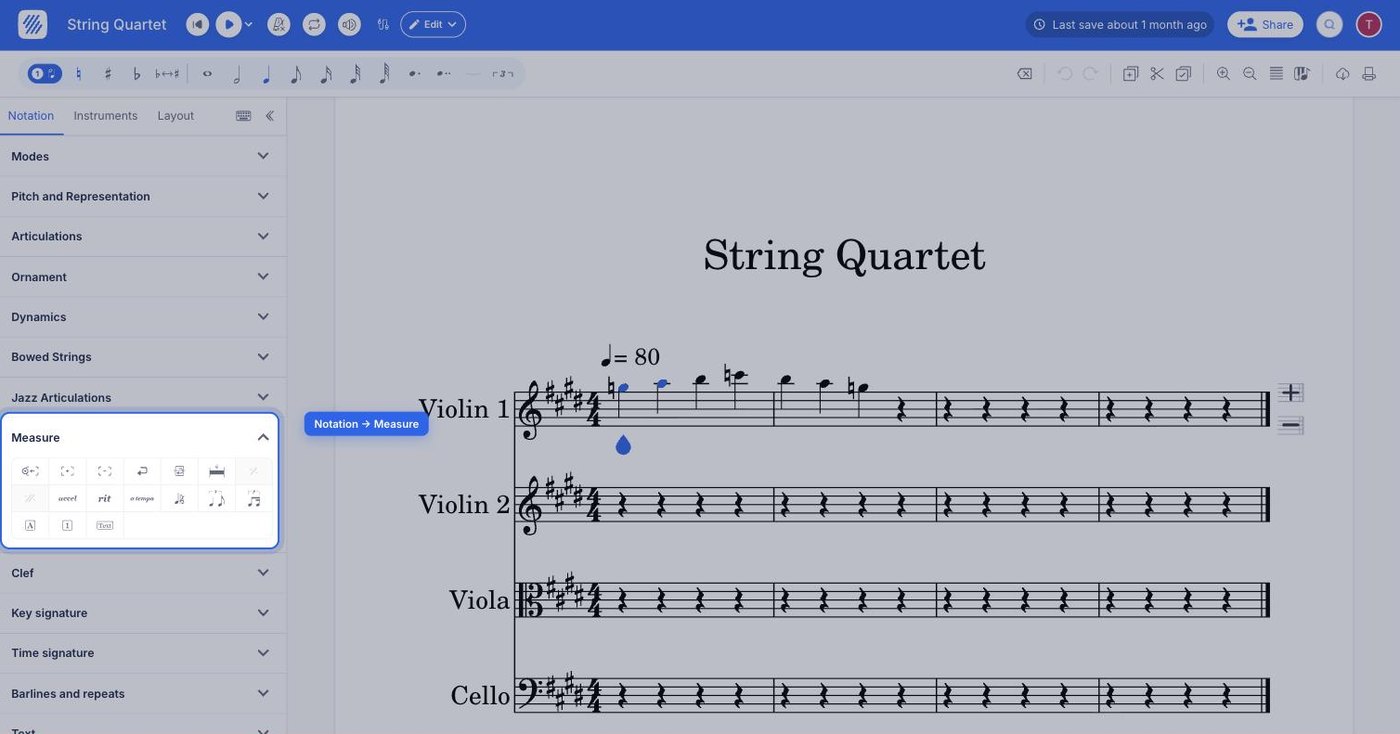
The da capo tool sits in the Measure section of the Notation tab, in the editor's left panel. It applies to the measure you select - the one after which the performer jumps back to the start - and engraves the D.C. marking there.
| Feature | Where to find it | Icon |
|---|---|---|
| Da capo | Notation tab, Measure section |  |
What is a da capo marking?
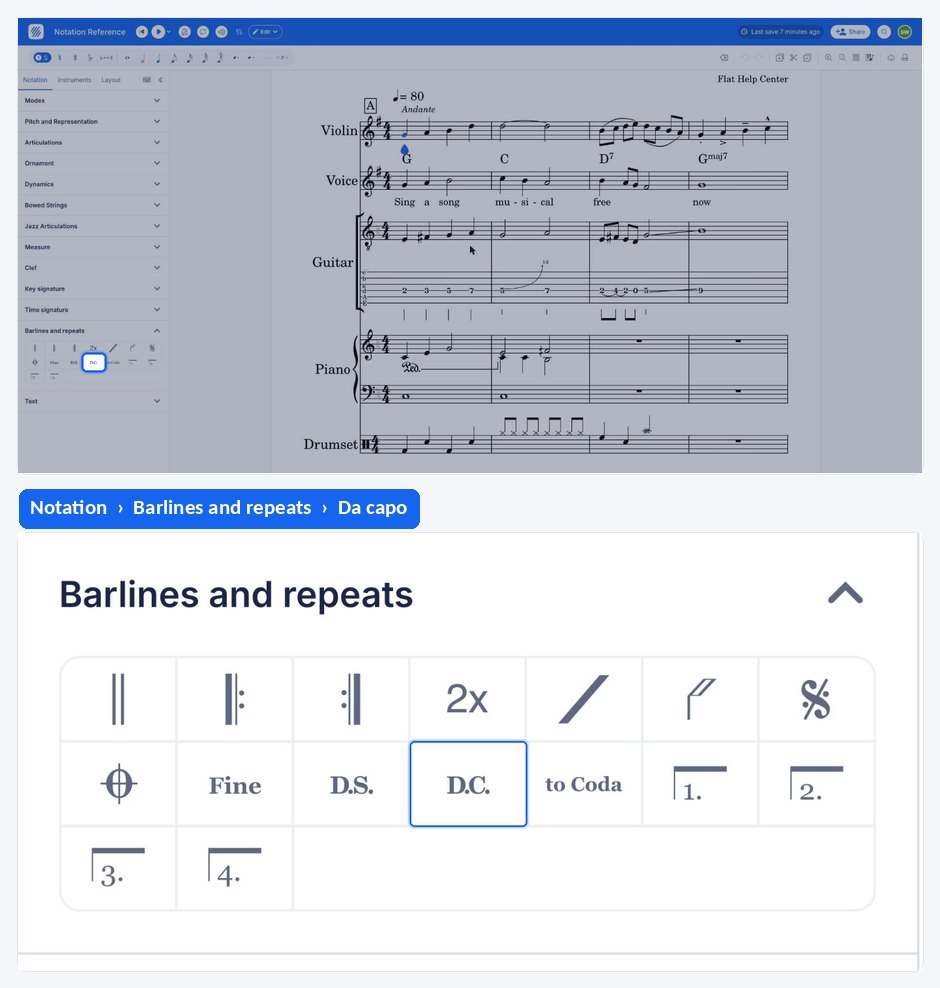
The da capo marking indicates the player has to jump back to the beginning of the score. It is written at the point where the jump happens, so the performer plays up to that measure, returns to the first measure, and then continues until the next instruction - a fine or a to coda - tells them where to stop or where to go.
How do I add a da capo marking?
Open the Notation tab in the left panel, select the measure after which the performer has to jump back to the start, then click the Da capo tool under Measure. The al coda or al fine will automatically be added if there is a fine marking, or a coda section.
What is a da capo marking?
The da capo marking indicates the player has to jump back to the beginning of the score. It is written at the point where the jump happens, so the performer plays up to that measure, returns to the first measure, and then continues until the next instruction - a fine or a to coda - tells them where to stop or where to go.
| Feature | Icon |
|---|---|
| Da capo | |
How do I add a da capo marking?
The da capo is applied to the measure after which the performer has to jump back to the start. The al coda or al fine will automatically be added if there is a fine marking, or a coda section.
Tap the measure after which the performer has to jump back to the start, drag the tool palette up, and tap Da capo under Barlines and repeats. The al coda or al fine is added automatically if there is a fine marking or a coda section.
Frequently asked questions
What is the difference between a da capo and a dal segno?
What does D.C. al fine mean?
It means the performer returns to the beginning and plays until the fine marking, which is where the piece ends. Flat writes the al fine for you: add a fine marking to the score, and the da capo is completed automatically.
Do I have to write al coda or al fine myself?
No. The al coda or al fine will automatically be added if there is a fine marking, or a coda section, in the score. Add the coda or the fine first and the da capo marking completes itself.