How to add a fine in Flat
Last updated September 16, 2026
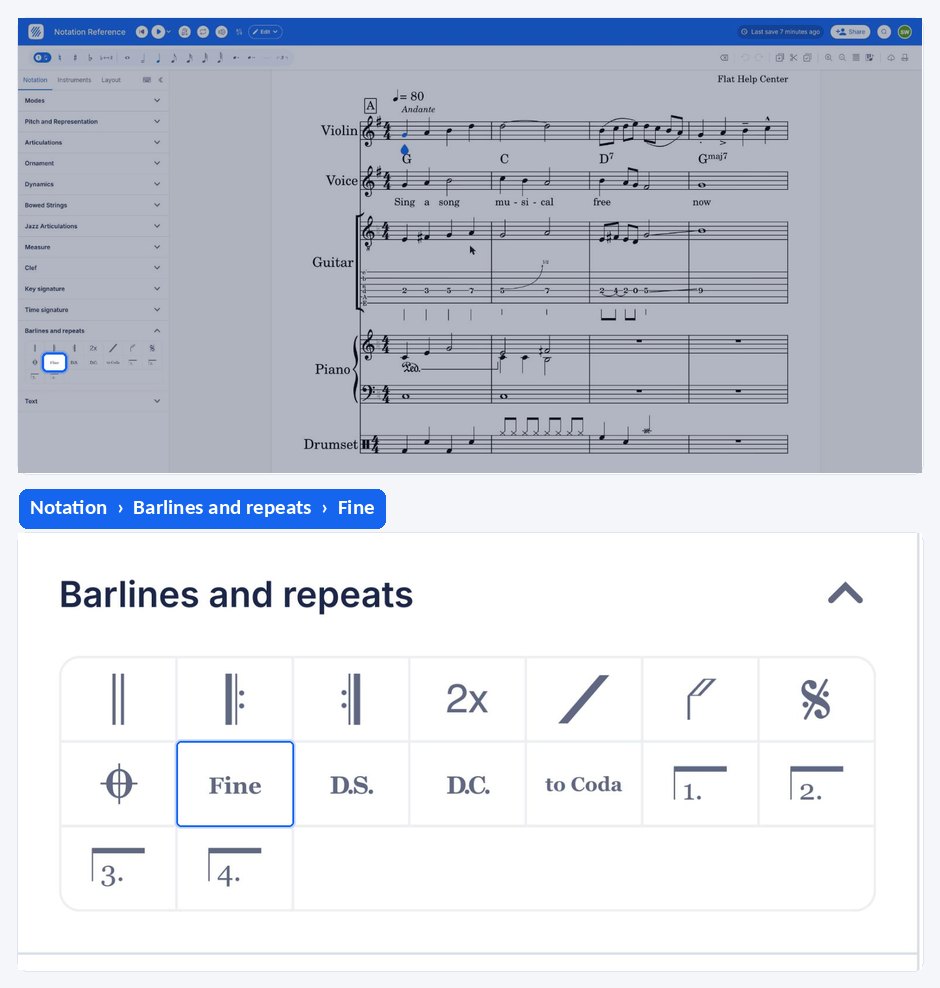
A fine in Flat is the marking used to mark the end of the score. Flat places it on the measure you select, and the player stops there after having jumped back to the beginning with a da capo, or to a segno marking with a dal segno.
Which tool adds a fine?
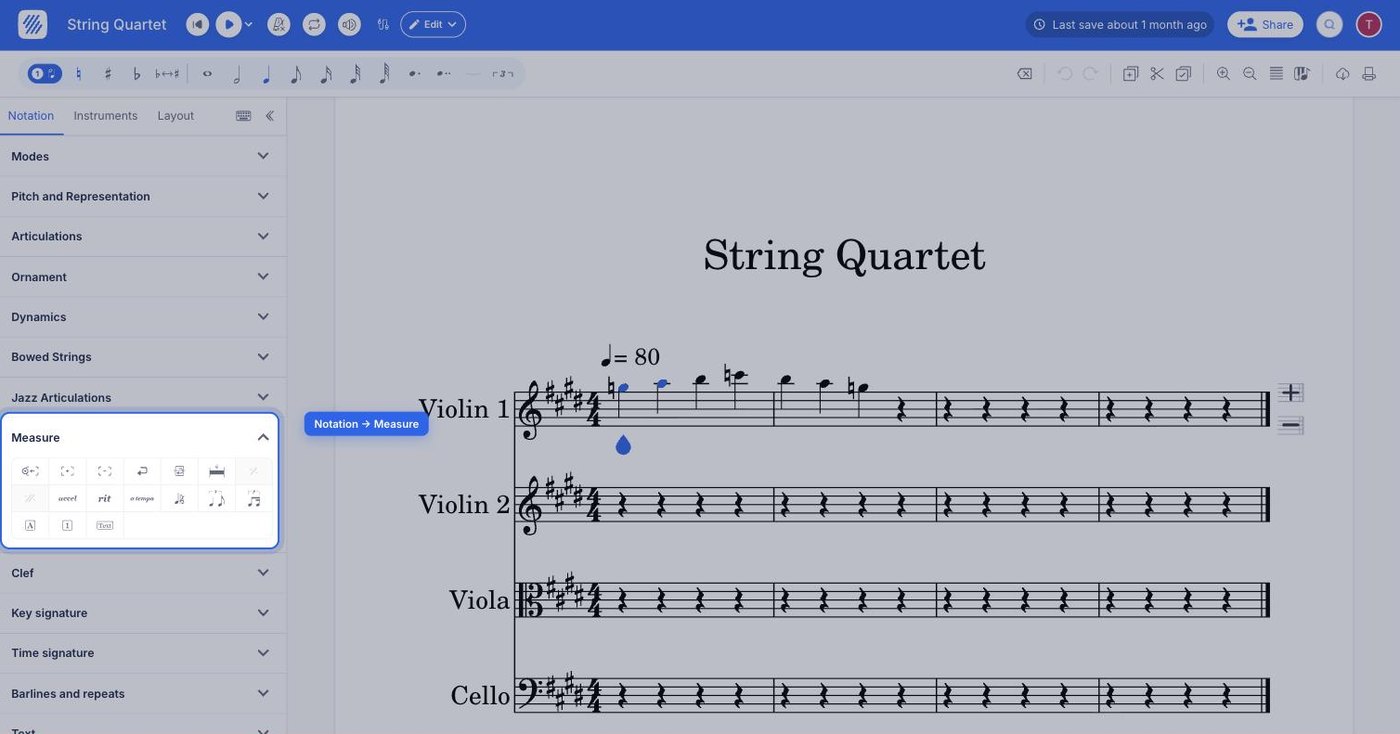
The fine tool sits in the Measure section of the Notation tab, in the editor's left panel. It applies to the measure you select, which becomes the point where the performance ends after a jump.
| Feature | Where to find it | Icon |
|---|---|---|
| Fine | Notation tab, Measure section |  |
What is a fine marking?
The fine marking is used to mark the end of the score. The player stops at the fine after having jumped back to the beginning of the score, or to a segno marking. On the first pass through the music the marking is ignored, which is why a fine only makes sense in a score that also contains a jump.
How do I add a fine marking?
Open the Notation tab in the left panel, select the measure to be the end of the score, then click the Fine tool under Measure.
If there is already a jump in this measure, it will be replaced by the Fine.
What is a fine marking?
The fine marking is used to mark the end of the score. The player stops at the fine after having jumped back to the beginning of the score, or to a segno marking. On the first pass through the music the marking is ignored, which is why a fine only makes sense in a score that also contains a jump.
| Feature | Icon |
|---|---|
| Fine | |
How do I add a fine marking?
The fine is applied to the measure that should be the end of the score. If there is already a jump in this measure, it will be replaced by the Fine.
Tap the measure that should end the score, drag the tool palette up, and tap Fine under Barlines and repeats.
Frequently asked questions
Do I need a da capo or a dal segno for a fine to work?
What is the difference between a fine and a coda?
What happens if the measure already has a jump marking?
The fine replaces it. If there is already a jump in that measure, adding a fine removes the existing marking, so choose a different measure when you need both. Each measure carries only one of these repeat and jump markings at a time.