How to swap voices in Flat
Last updated September 23, 2026
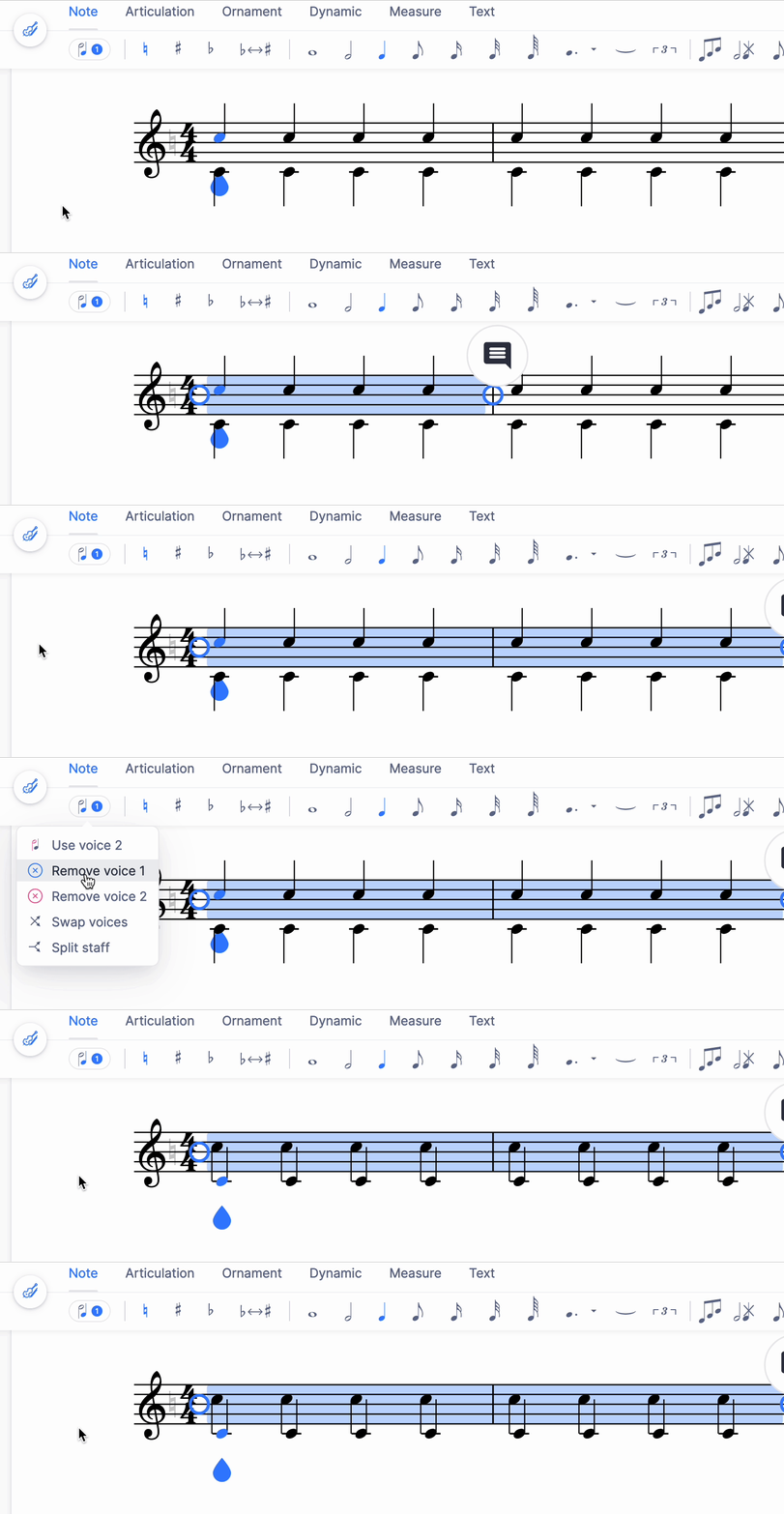
Swap voices in Flat is a tool that exchanges the voices assigned to the notes in a selected range. Flat moves the notes of the upper voice to the lower voice and the notes of the lower voice to the upper one, which is how you correct stem directions on a passage without rewriting it.
Where do I find the Swap voices tool?
Swap voices sits in the voice menu, opened from the Switch voices button in the compact strip above the left panel. It stays available whichever Notation section you are working in, and it applies to the range of notes you have selected.
| Tool | Where to find it | Icon |
|---|---|---|
| Swap voices | Voice menu, above the left panel |  |
What does swapping voices do?
Use this tool when you want to change the stem directions of voice notes on the selected range. The tool changes the voice assigned to the notes: the notes of the upper voice go to the lower voice, and the notes of the lower voice go to the upper one, so the stems flip accordingly.

How do I swap voices on a selection?
Select the range of notes that you want to swap, then click the voice button above the left panel and click the button Swap voices. Flat reassigns the voices across that whole range in one action, and the stem directions follow the new assignment.
What happens with tuplets?
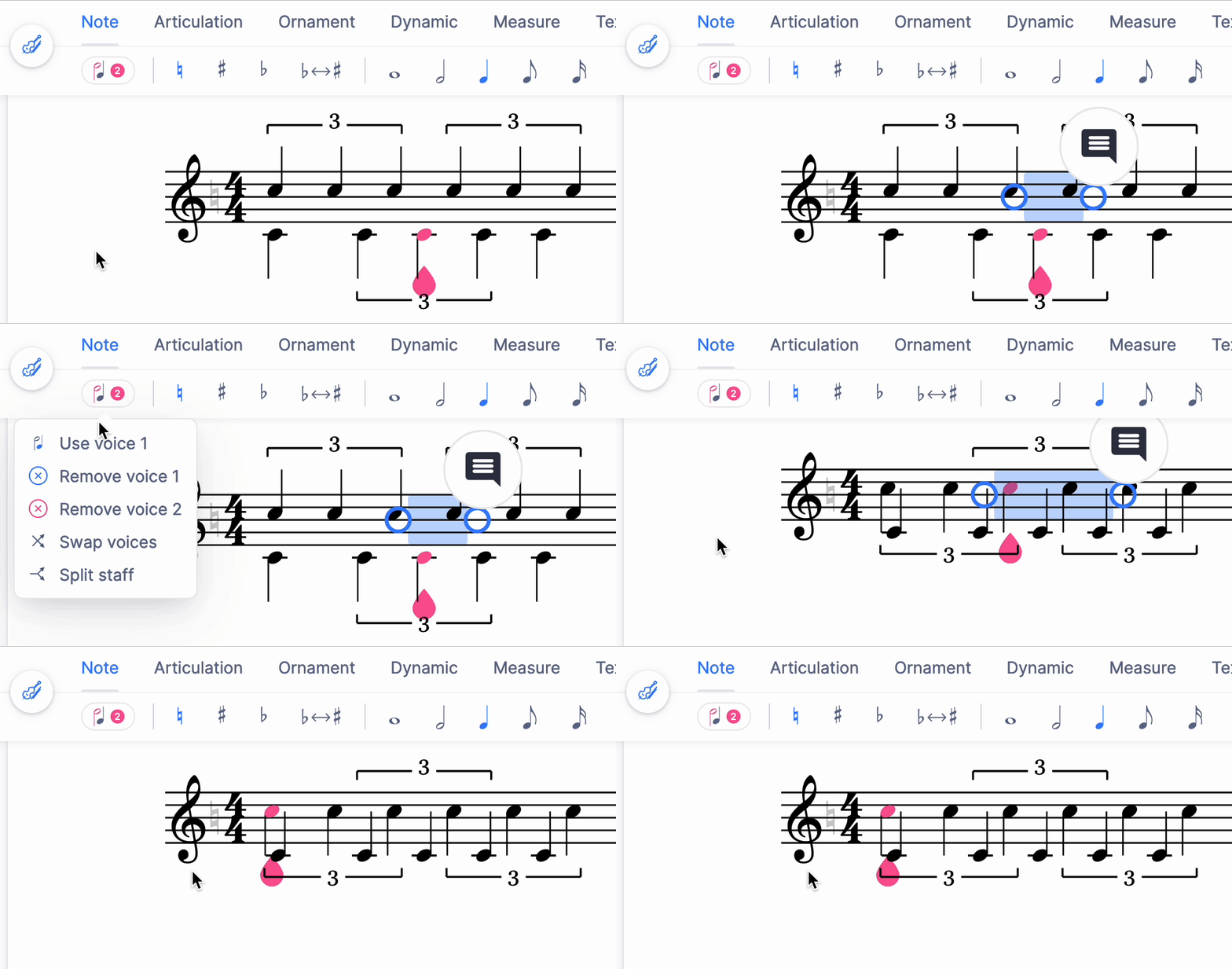
When there are tuplets in the selection, the tool will make sure to encompass all the notes of the tuplet. A tuplet is therefore never left half-swapped, even when your selection stops in the middle of one, so the grouping stays consistent after the operation.
Frequently asked questions
Why are the stems in my two-voice passage pointing the wrong way?
Stem direction follows the voice each note belongs to, so notes entered into the wrong voice end up with inverted stems. Swapping the voices on that range exchanges them — upper becomes lower and lower becomes upper — and the stems are redrawn to match, with no need to re-enter the music.
Does swapping voices change my notes?
It changes which voice each note is assigned to, not the notes themselves. The pitches and rhythms you selected stay as they are; they simply move between the upper and the lower voice, which is what makes the stems and the vertical layout of the passage change.
Do I need two voices for this tool?
The tool exchanges the notes of the upper voice with those of the lower voice, so it is meant for passages that already carry two voices. See working with voices to add a second voice to a staff before swapping them.
What is the difference between swapping voices and splitting a staff?
Swapping keeps everything on one staff and only changes which voice each note belongs to. Splitting a staff moves the content onto two staves instead, one per voice, which is what you want when each player needs their own part.