How to add and remove a turn in Flat
Last updated September 16, 2026
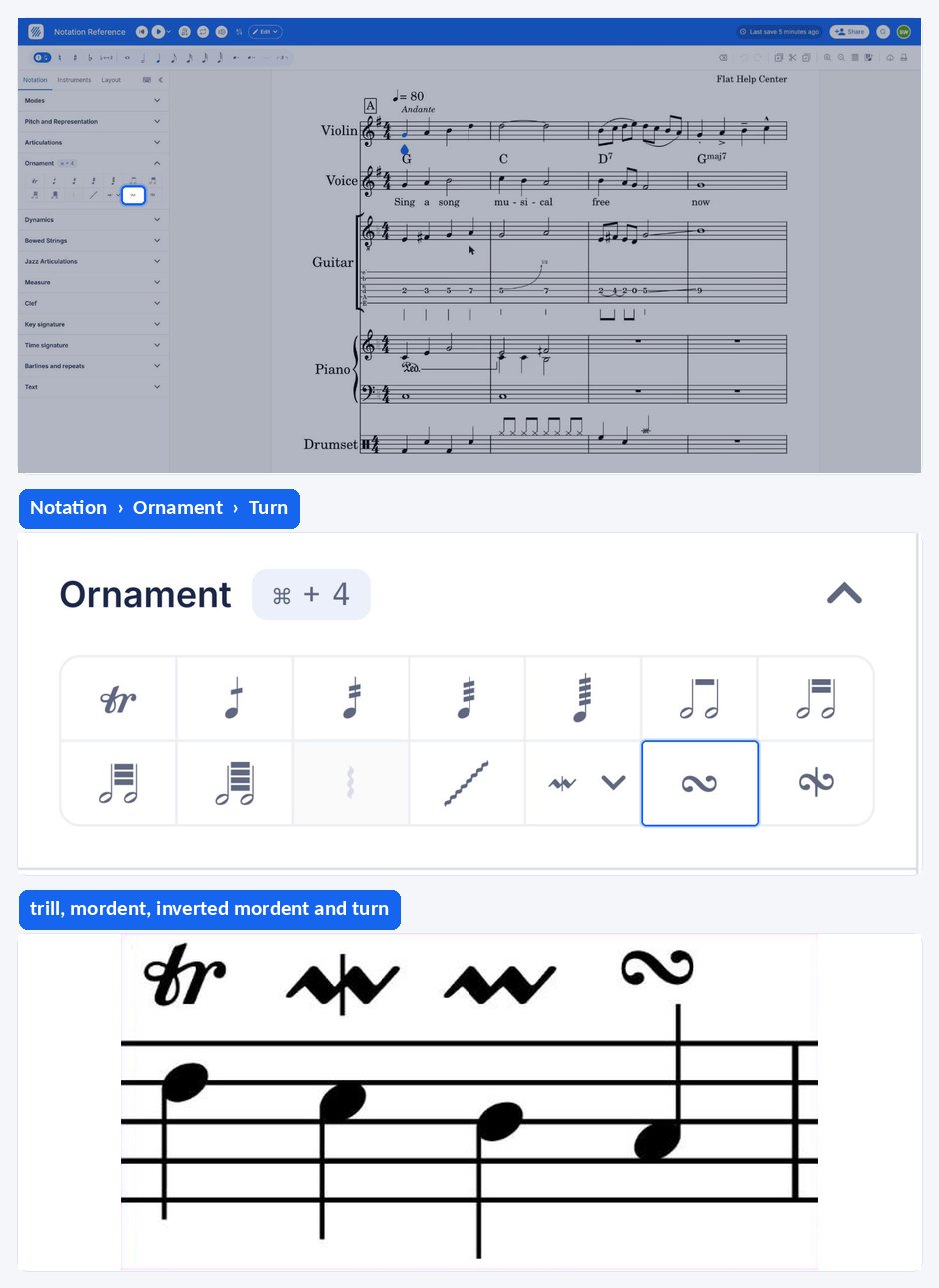
A turn in Flat is an ornament written as a lying S above the staff, telling the player to circle around the written note before landing back on it. Flat writes both the regular turn and the inverted turn, crossed by an oblique line, from the Ornament section of the Notation panel.
Which turn symbols does Flat support?
Flat offers two turn symbols, both in the left panel under the Notation tab, in the Ornament section: the regular turn and the inverted turn. Select the note you want to decorate, then click the one you need.
| Feature | Location | Icon |
|---|---|---|
| Turn | Notation > Ornament |  |
| Inverted turn | Notation > Ornament |  |
What is a turn?
A Turn is an ornament symbolized by a lying S above the staff for a regular one, and crossed by an oblique line when inverted. When played, a turn should start with the note above the base note, followed by the principal note, then the one below, and ends on the main note. For inverted turns, the musician should start with the note below the written one. The duration of a turn should not be longer than the rhythmic value of the main note.
How do I add or remove a turn?
First, select the desired note. Then, open the Notation tab in the left panel and click the turn you want under Ornament. You can either add a regular turn or an inverted one, and Flat writes the matching symbol above the staff.
Which turn symbols does Flat support?
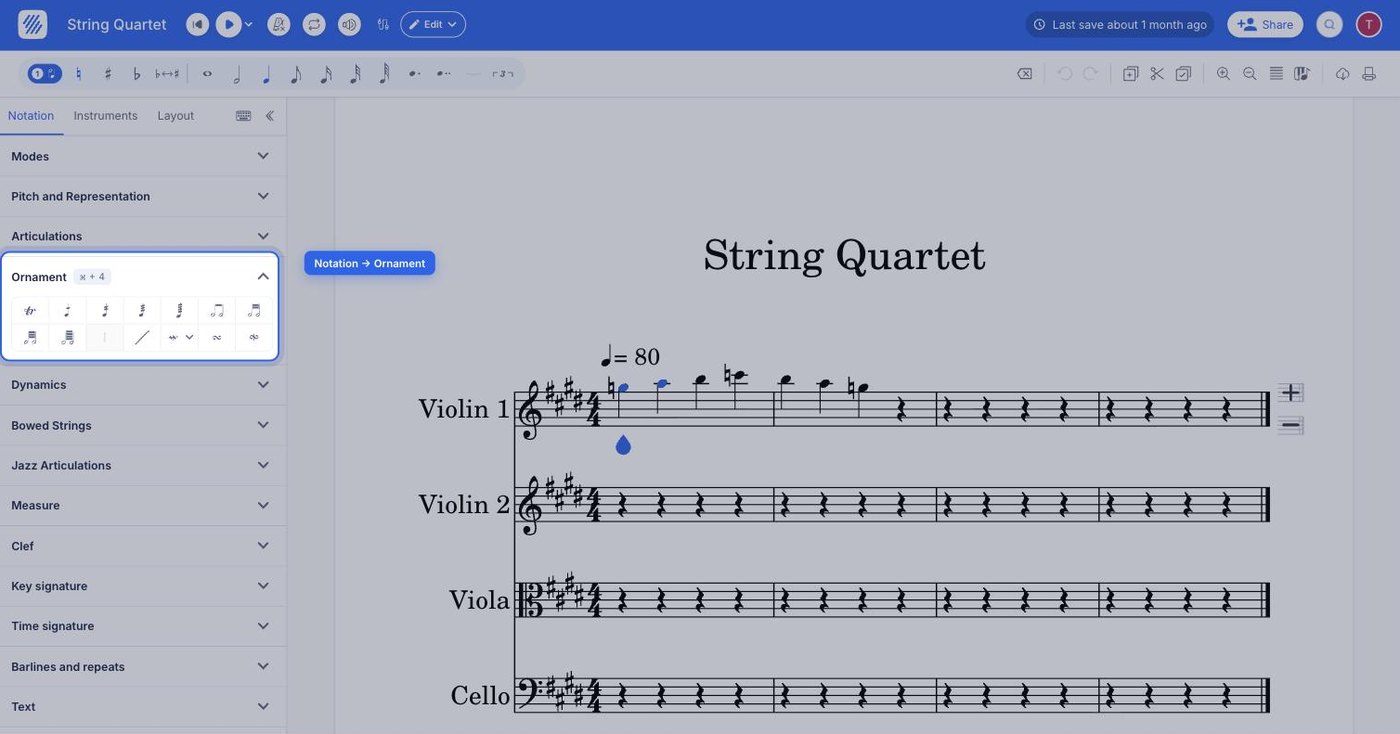
Flat offers two turn symbols in the Ornament section: the regular turn and the inverted turn.
| Feature | Icon |
|---|---|
| Turn | |
| Inverted turn | |
What is a turn?
A Turn is an ornament symbolized by a lying S above the staff for a regular one, and crossed by an oblique line when inverted. When played, a turn should start with the note above the base note, followed by the principal note, then the one below, and ends on the main note. For inverted turns, the musician should start with the note below the written one. The duration of a turn should not be longer than the rhythmic value of the main note.
How do I add or remove a turn?
Select the note, drag the tool palette up, and tap either the regular or the inverted turn under Ornament. Tap the same symbol again to remove it. The turn is drawn above the staff and is played within the note it decorates.
Frequently asked questions
What is the difference between a turn and an inverted turn?
The starting note. A regular turn begins with the note above the base note, then the principal note, then the one below, and ends on the main note. An inverted turn starts with the note below the written one instead. On the page, the inverted symbol is the lying S crossed by an oblique line.
How long should a turn last?
The duration of a turn should not be longer than the rhythmic value of the main note. All four notes of the ornament have to fit inside the written note, so a turn on a short value is played faster than the same turn on a long one.
What is the difference between a turn and a mordent?
A turn circles around the written note, using both its upper and lower neighbours. A mordent alternates the written note with just one neighbour, above or below, and always starts and ends on the written note. The turn is a lying S; the mordent is a zigzag.
Where do I find the turn in the redesigned editor?
In the left panel. The tools now live in a left sidebar with Notation, Instruments, and Layout tabs, and both turn symbols are in the Ornament section of the Notation tab, next to the trill, the mordent, the tremolos, the arpeggio, and the glissando.