How to add or change a clef in Flat
Last updated October 13, 2026
A clef in Flat sets which pitches the lines and spaces of a staff represent. Flat offers the G, F and C clefs on their usual lines, plus versions transposed one or two octaves up or down, and a new clef applies from where you put it until the next clef or the end of the score.
Where do I find the clef tool?
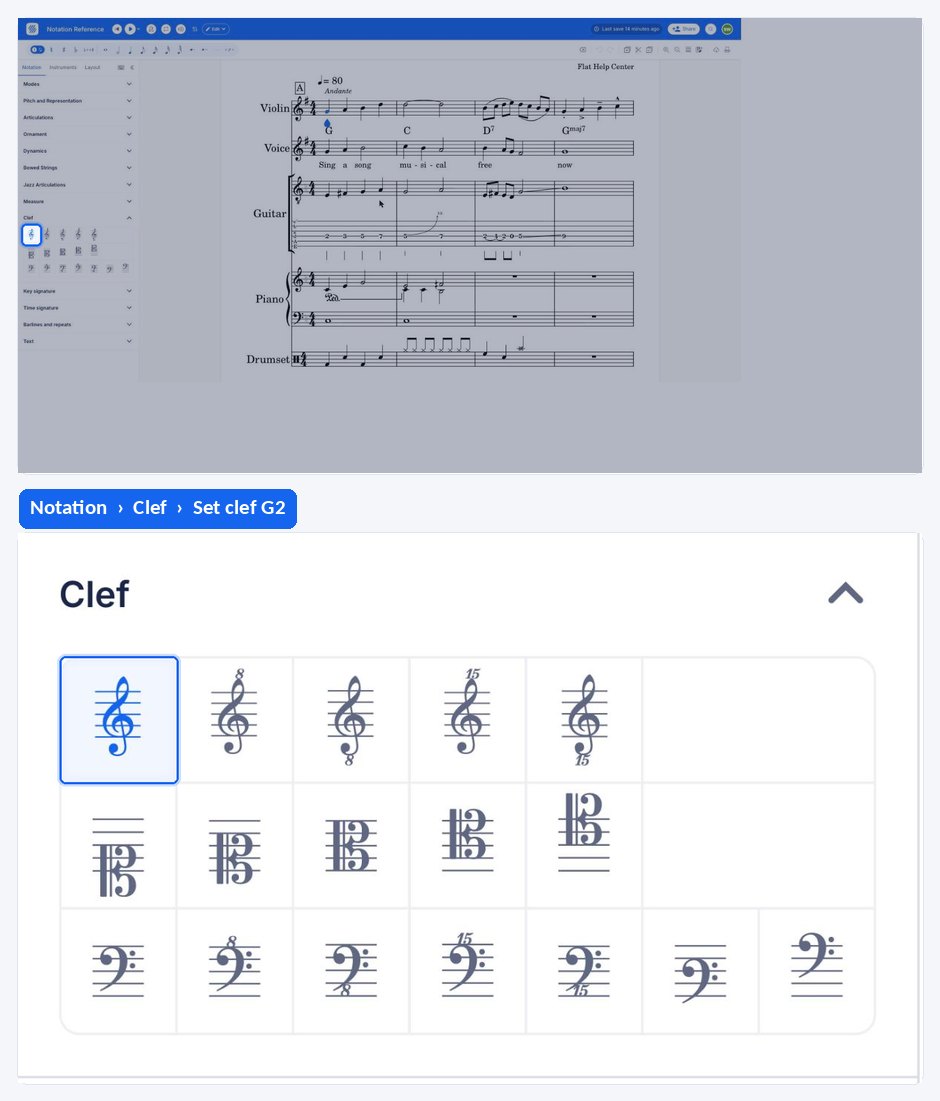
The clef tool lives in the left panel: open the Notation tab and go to the Clef section. It applies the clef you pick to the measure your cursor is in, or to the range of measures you selected beforehand.
| Feature | Where to find it | Icon |
|---|---|---|
| Clef | Notation tab, Clef section |  |
How do I add a new clef?
Open the Notation tab in the left panel, go to the Clef section and choose the new clef. If there is no range selection, the new clef will be applied until the next clef or the end of the score. If you only want to change the clef on specific measures, make a range selection of the measures before choosing the clef.
How do I change an existing clef?
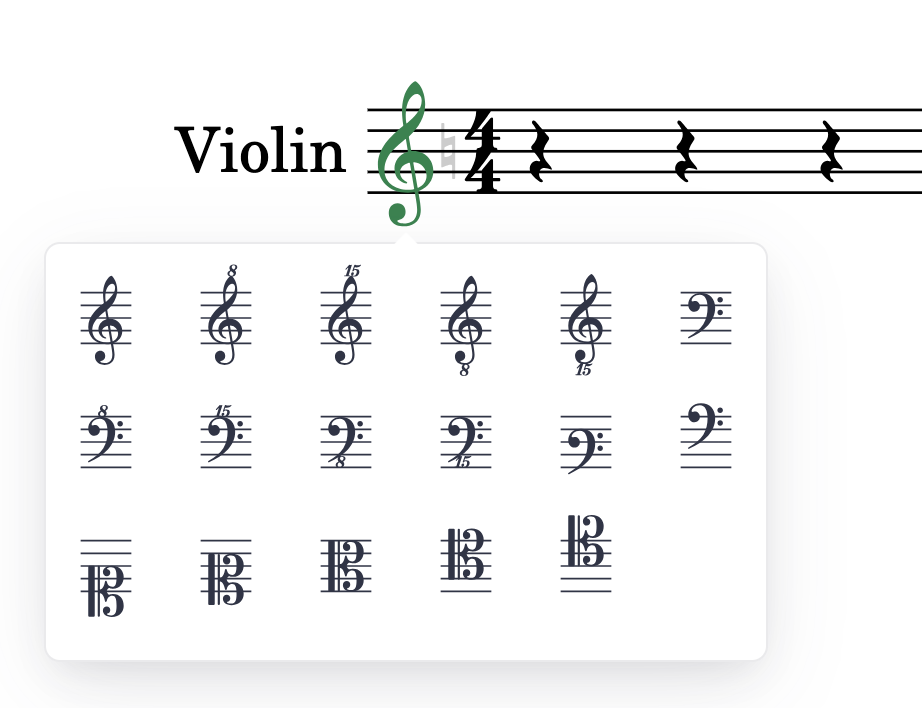
You can change an existing clef by clicking on the clef in the score and choosing the new clef, or by using the tool available in the Clef section of the Notation tab. Both routes replace the clef at that position, and the new one stays in force until the next clef change.
Frequently asked questions
Which clefs does Flat support?
Flat offers the G clef, the F clef and the C clef, each available on the staff lines where it is normally written — so treble, bass, alto and tenor clefs are all covered. The G and F clefs also come in versions transposed one or two octaves up or down, for parts such as tenor voice or contrabass.
Can I put a clef change in the middle of a piece?
Yes. Place the cursor on the measure where the new clef should start and pick it: the change is written into the score at that point and stays in force until the next clef or the end of the part, which is how instruments that move between registers are usually notated.
What is the difference between changing the clef and transposing?
A clef change alters how the same sounding pitches are written on the staff. Transposing changes the pitches themselves, by an interval, a key, or a number of semitones. Use a clef change for readability, and transposition when the music has to sound higher or lower.