How to add and remove a trill in Flat
Last updated September 16, 2026
A trill in Flat is an ornament written as tr above a note, telling the player to alternate swiftly between that note and the one immediately above it. Flat adds and removes the trill from the Ornament section of the Notation panel with the same button, one note at a time.
Where is the trill button?
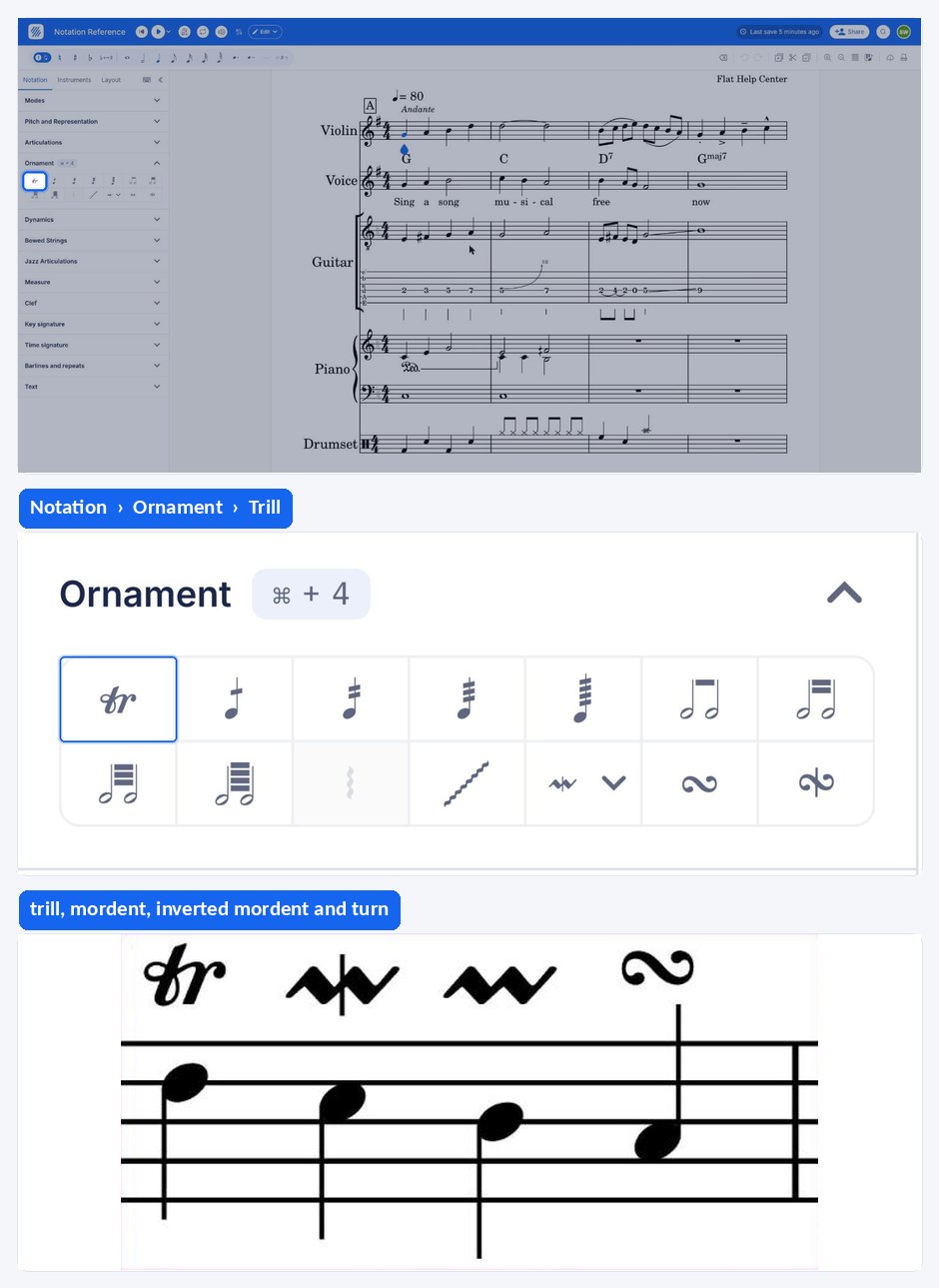
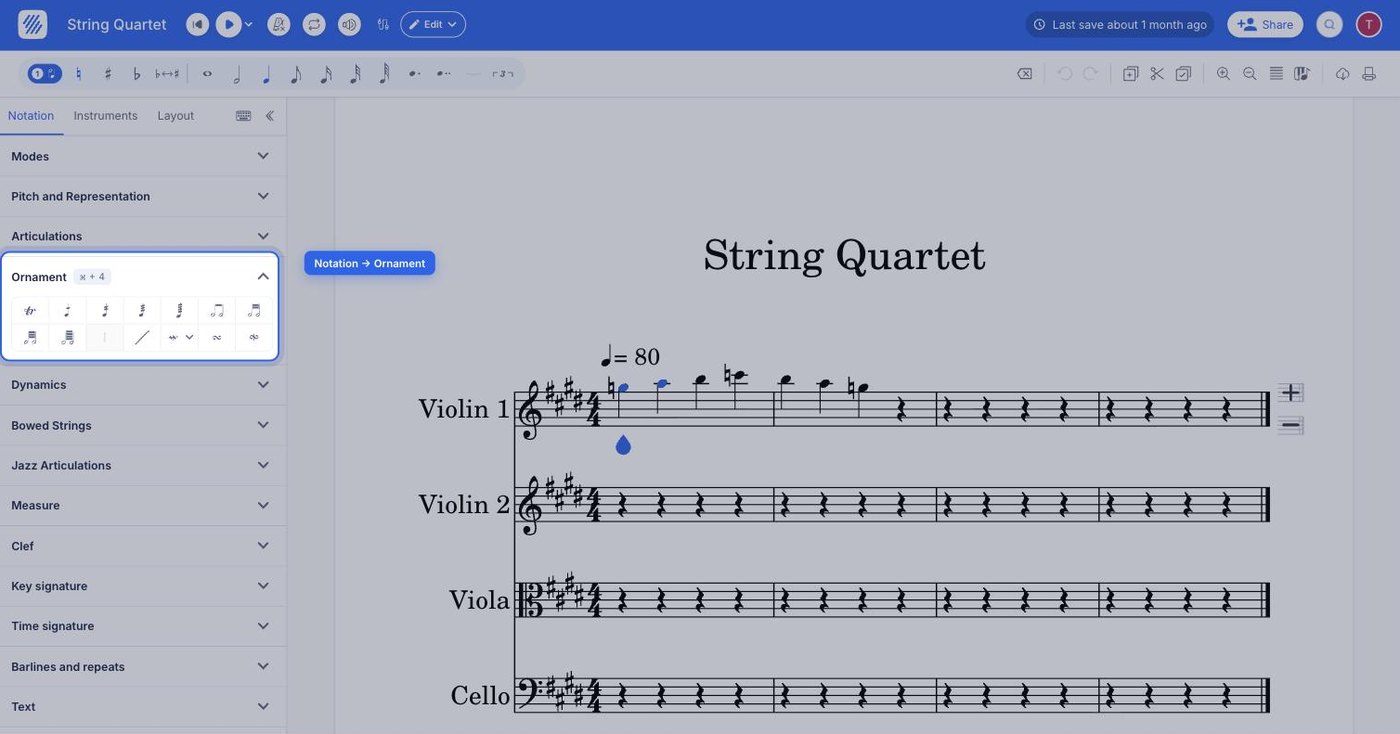
The trill button sits in the left panel, in the Notation tab, under Ornament — the first of the ornaments, alongside the mordent, turn, tremolo, arpeggio, and glissando. Select the note first, then click it.
| Available in | Notation > Ornament |
| Icon |  |
What is a trill?
In music notation, a trill is represented by the symbol tr placed above the note. When performed, it involves swiftly and continuously alternating between the main note and the one immediately above it. This embellishment adds a dynamic and expressive flourish to the music. It's commonly used to bring liveliness and intensity to a piece. The duration and speed of a trill can vary depending on the context and the composer's intentions.
How do I add or remove a trill?
Open the Notation tab in the left panel, select the desired note, and click Trill under Ornament. Click again to remove the trill. Flat writes the tr symbol above the note, where the player expects to read it.
Frequently asked questions
Which note does a trill alternate with?
The one immediately above the written note. A trill moves swiftly and continuously between the main note and its upper neighbour for the length of the note, which is why only the main note carries the tr symbol.
How long does a trill last?
The duration and speed of a trill can vary depending on the context and the composer's intentions. The tr symbol marks where the ornament starts and which note it decorates; performance practice and the tempo of the piece decide how many alternations the player fits in.
What is the difference between a trill and a mordent?
A trill is a continuous alternation between the main note and the one above, lasting as long as the note. A mordent is a short, fixed alternation — three notes, or five or more for a long mordent — that always starts and ends on the written note.
What is the difference between a trill and a turn?
A trill alternates between two neighbouring pitches. A turn instead traces a small shape around the written note: the note above, the principal note, the note below, and back to the main note. The turn is written as a lying S above the staff.