How to add or remove a fermata in Flat
Last updated October 13, 2026
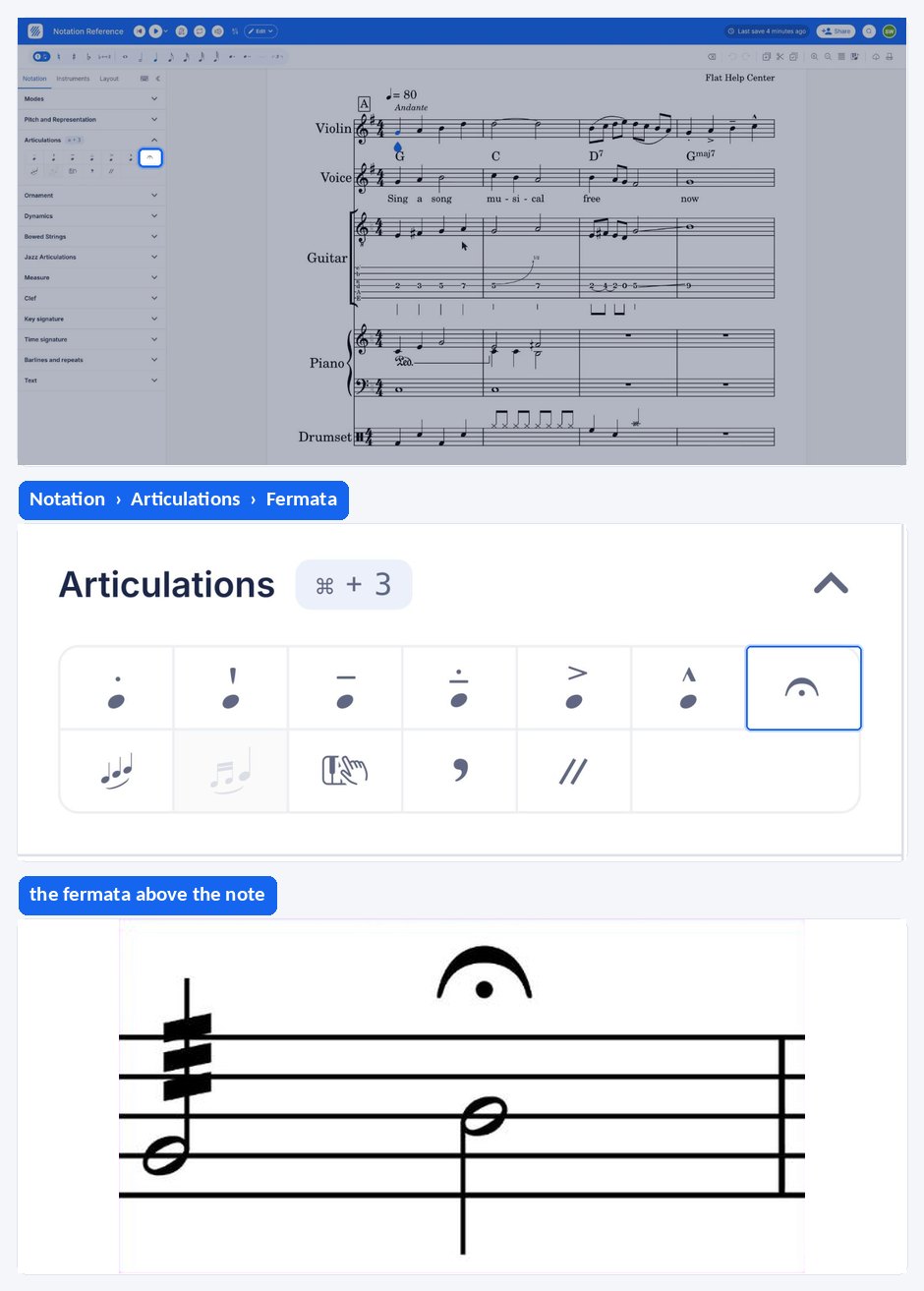
A fermata in Flat is a music notation indicating that the note can be held for an undefined amount of time. Flat applies it to a note or to a rest, from the Articulations section of the Notation tab, and it behaves like the other articulations: clicking the icon a second time removes the fermata again.
Where is the fermata tool?
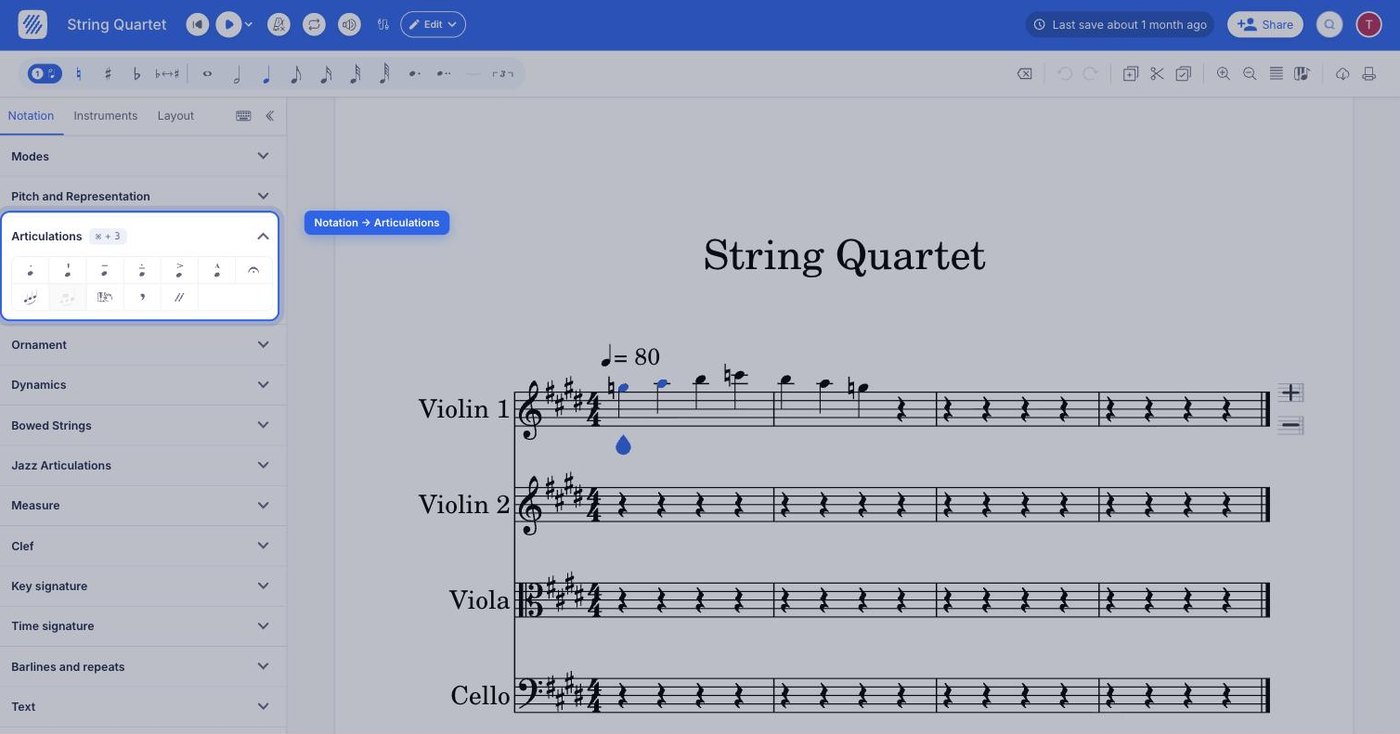
The fermata sits with the other articulations, in the Articulations section of the Notation tab in the editor's left panel. It applies to whatever note or rest you selected first.
| Where to find it | Icon | Keyboard shortcut |
|---|---|---|
| Notation tab, Articulations |  | 7 (only in the Articulation toolbar) |
What is a fermata?
A Fermata is a music notation indicating that the note can be held for an undefined amount of time. How long it lasts is the performer's decision, or the conductor's - the sign says that the written value no longer applies, not how much longer the note should ring.
How do I add or remove a fermata?
Select a specific note or rest, then open the Notation tab in the left panel and click the fermata icon under Articulations to add one. Click on the icon again to remove it.
Frequently asked questions
Can I put a fermata on a rest?
Yes. A fermata applies to a note or to a rest: select the rest first, then click the fermata icon. A fermata over a rest tells the performer to hold the silence, which is how a pause between two sections is usually written.
How long should a fermata be held?
There is no fixed length - that is what the sign means. A fermata indicates the note can be held for an undefined amount of time, so the performer or the conductor decides, usually stretching the written value by roughly half again or more depending on the style.
What is the difference between a fermata, a breath mark, and a caesura?
A fermata lengthens a note or a rest. A breath mark asks for a short breath between two notes, and a caesura is a longer, complete break in the music. All three are available with the other articulations in the Notation tab.