How to add and remove a glissando in Flat
Last updated October 13, 2026
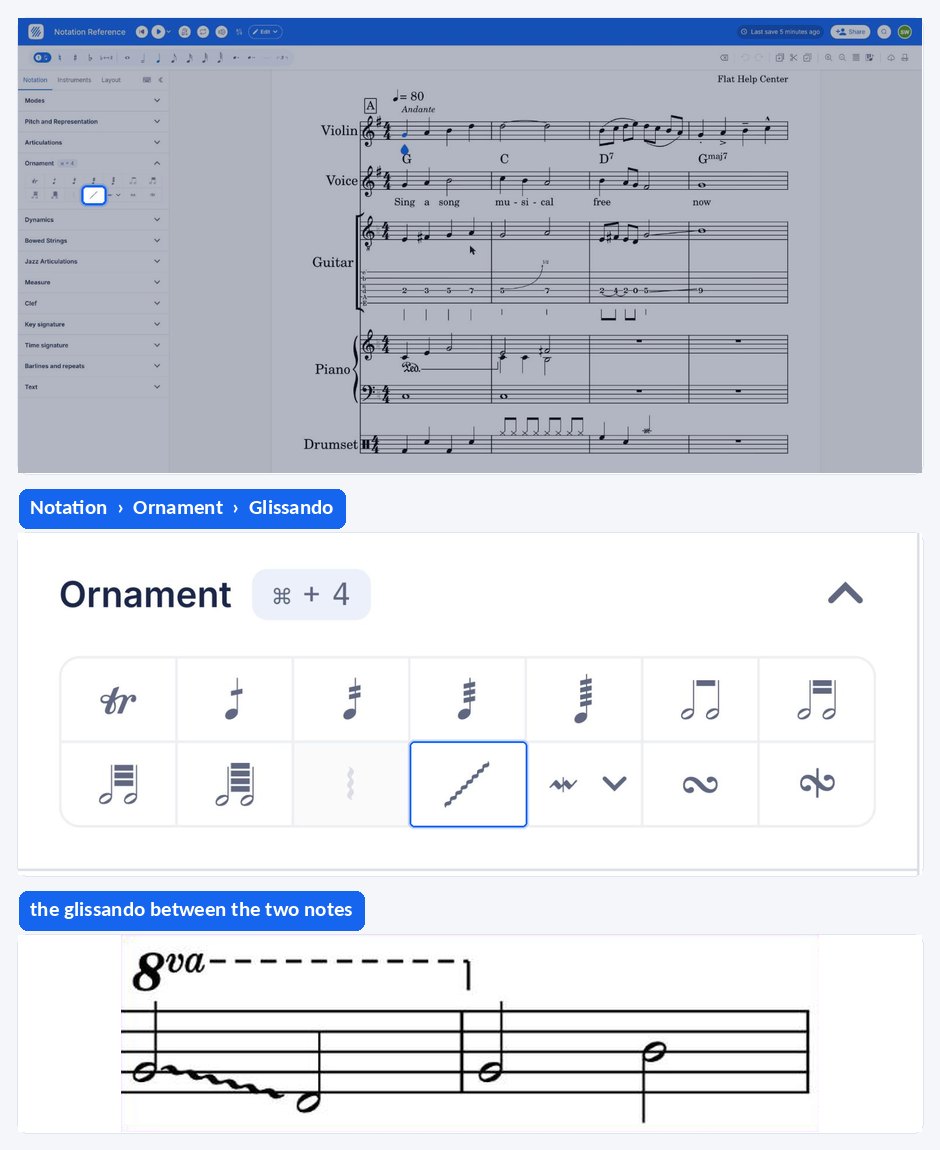
A glissando in Flat is an ornament that shows a note sliding smoothly from one pitch to another, drawn as a wavy line between the two notes. Flat adds and removes the glissando from the Ornament section of the Notation panel, starting from the first note of the slide.
Where is the glissando button?
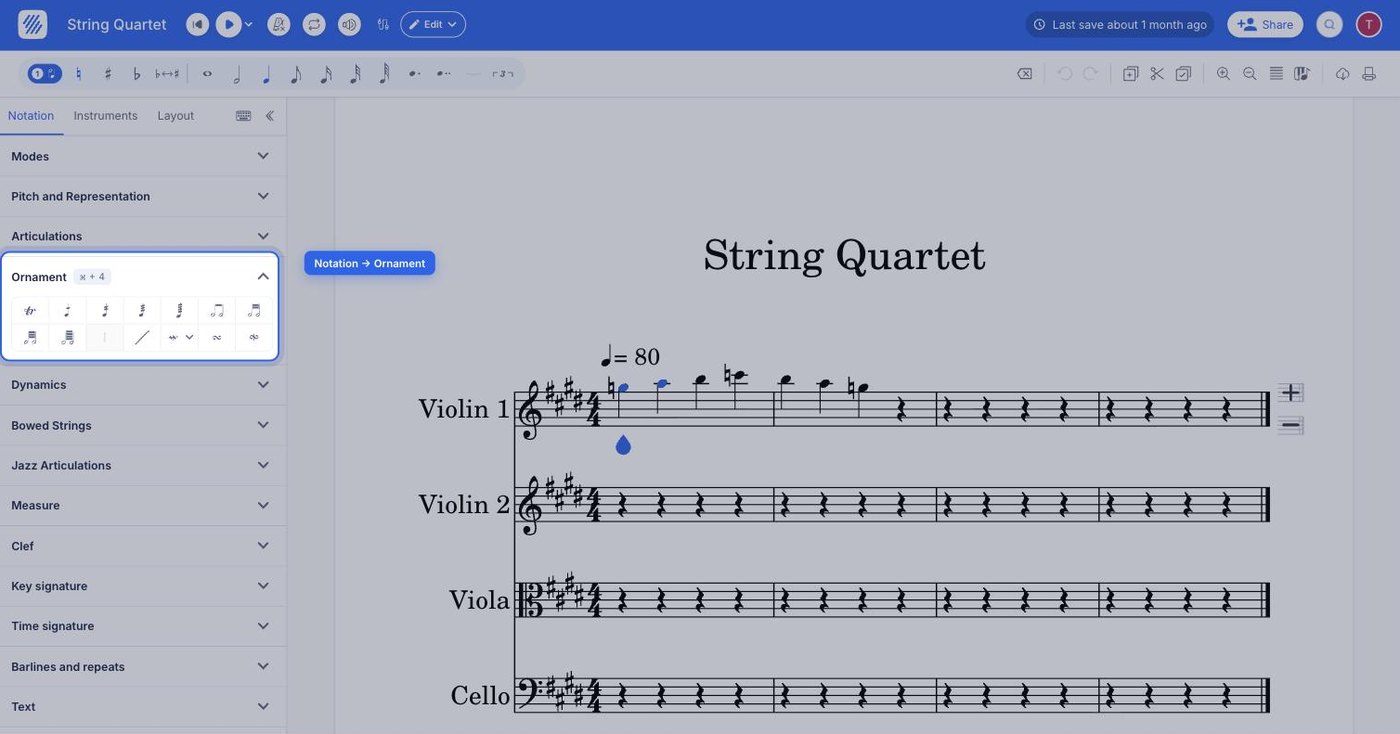
The glissando button sits in the left panel, in the Notation tab, under Ornament — alongside the trill, mordent, turn, tremolo, and arpeggio. Select the first note of the slide, then click the button.
| Available in | Notation > Ornament |
| Icon |  |
What is a glissando?
In music, a glissando indicates that a note smoothly slides or glides from one pitch to another. The term "glissando" comes from the French word "glisser," which means "to glide." This technique is indicated by a wavy line connecting the starting and ending notes on the sheet music. It adds a fluid and expressive touch to the interpretation.
How do I add or remove a glissando?
Select the first note of the slide, then open the Notation tab in the left panel and click Glissando under Ornament. Click again to remove the glissando. Flat draws the wavy line from that note to the one that follows it.
Frequently asked questions
Which note do I select to add a glissando?
The first one — the note the slide starts from. Flat draws the wavy line from that note to the one that follows, so selecting the second note of the pair instead attaches the glissando to the wrong side of the slide.
What does a glissando look like on the score?
A wavy line connecting the starting and ending notes. The line tells the player to glide continuously between the two written pitches rather than moving between them in discrete steps, which is where the name comes from — "glisser" is French for "to glide".
What is the difference between a glissando and an arpeggio?
A glissando slides between two written pitches and is drawn as a wavy line between them. An arpeggio spreads the notes of one chord so they sound one after the other, and is drawn as a vertical wavy line beside the chord. Both sit under Ornament.